合肥新东方考研网为27考研人整理了2026年考研英语一阅读理解Text4真题及解析,供大家参考。
一、试题部分
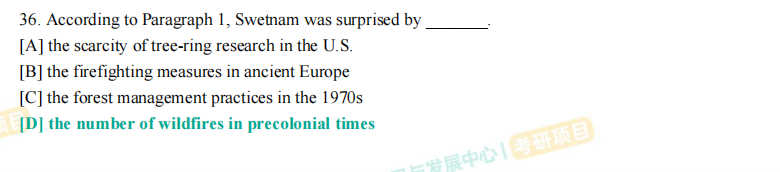
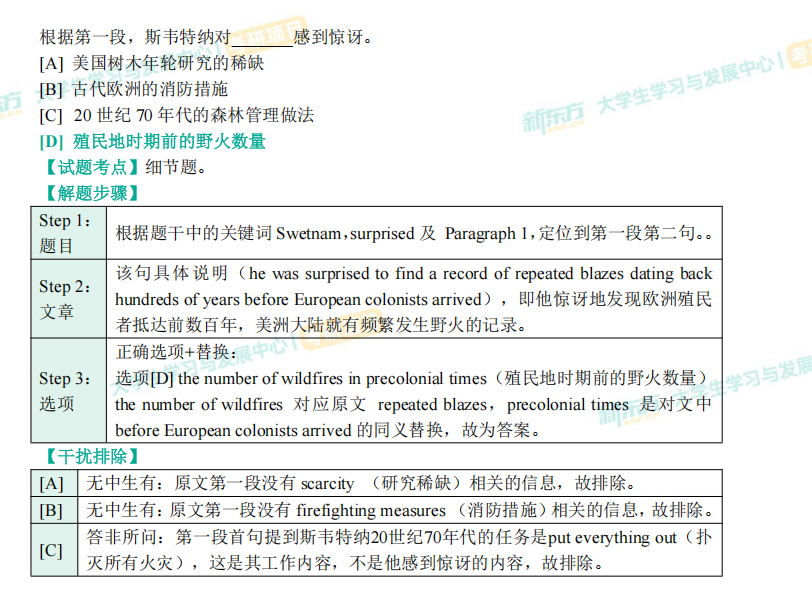
When Tom Swetnam joined the U.S. Forest Service in the 1970s, his mandate was to “put everything out,” he recalled. But when Swetnam enrolled in graduate school at the University of Arizona’s Laboratory of Tree-Ring Research, he was surprised to find a record of repeated blazes dating back hundreds of years before European colonists arrived on the continent. Some of the trees he analyzed bore more than 20 fire scars spaced among their rings.
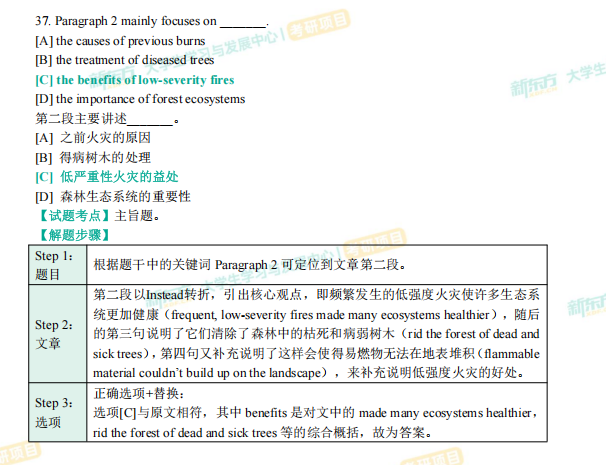
The fact that fires happened so often meant they couldn’t have been severe enough to kill most trees. Instead, a growing body of research showed that frequent, low-severity fires made many ecosystems healthier. They rid the forest of dead and sick trees, reducing competition and curbing the spread of disease. Because flammable material couldn’t build up on the landscape, blazes tended to move slowly and peter out when they reached the footprints of previous burns.
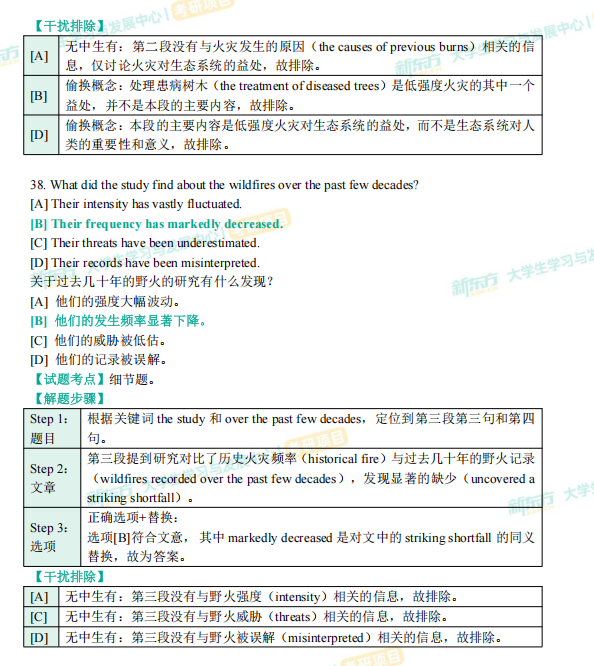
In 2022, Swetnam and other scientists teamed up to compile a database of fire-scarred trees from across the continent. Their North American tree-ring fire-scar network (NAFSN) provided the basis for a study published last month. In the study, the researchers compared the historical fire cadence with the wildfires recorded over the past few decades, and uncovered a striking shortfall. The NAFSN sites experienced less than a quarter of the number of fires that would have been expected without fire suppression.
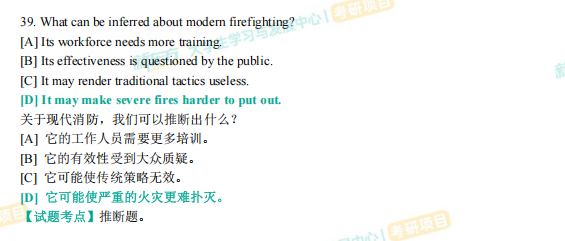
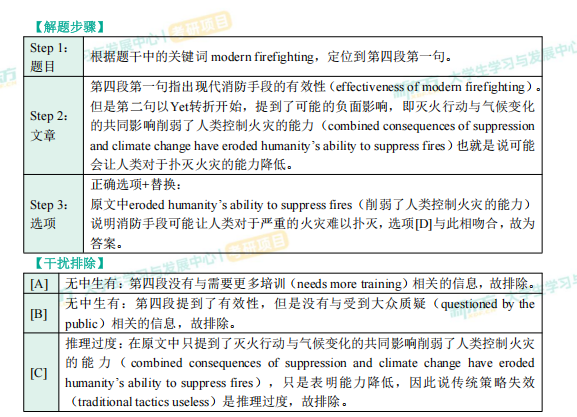
This deficit is a testament to the effectiveness of modern firefighting, said Kelly Martin, a past president of the International Association of Wildland Fire. Yet the combined consequences of suppression and climate change have eroded humanity’s ability to suppress fires, particularly those that ignite under the most dangerous weather conditions.
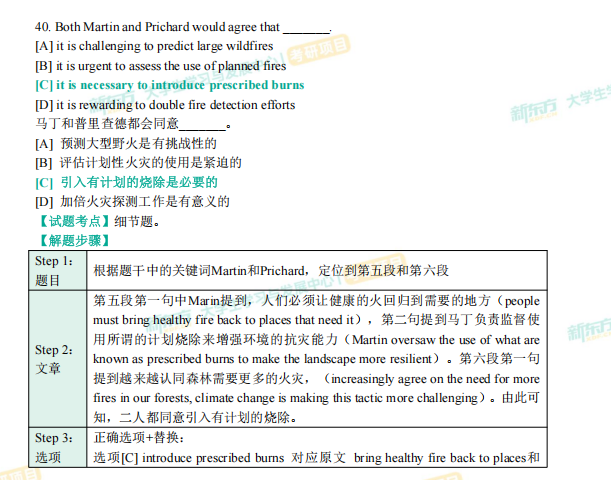
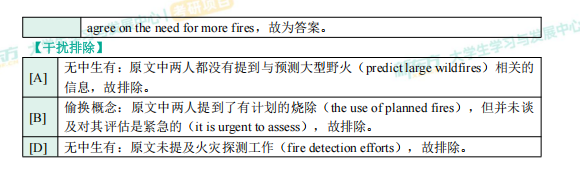
To prevent entire ecosystems from going up in smoke, Martin said, people must bring healthy fire back to places that need it. At Yosemite National Park, Martin oversaw the use of what are known as prescribed burns to make the landscape more resilient. These fires were carefully planned and intentionally ignited during periods when weather kept the blazes easy to control, and helped eliminate some of the fuel that had built up around important park facilities. Research shows that these prescribed burns make subsequent wildfires less severe, even if the later fires happen under the most dangerous weather conditions.
Yet even as scientists and public officials increasingly agree on the need for more fires in our forests, climate change is making this tactic more challenging, experts said. “It’s a double-edged sword because wildfires are getting more severe and larger under climate change and we need this work even more, but then the work gets more challenging,” said Susan Prichard, a fire ecologist at the University of Washington.
36. According to Paragraph 1, Swetnam was surprised by ______.
[A] the scarcity of tree-ring research in the U.S.
[B] the firefighting measures in ancient Europe
[C] the forest management practices in the 1970s
[D] the number of wildfires in precolonial times
37. Paragraph 2 mainly focuses on ______.
[A] the causes of previous burns
[B] the treatment of diseased trees
[C] the benefits of low-severity fires
[D] the importance of forest ecosystems
38. What did the study find about the wildfires over the past few decades?
[A] Their intensity has vastly fluctuated.
[B] Their frequency has markedly decreased.
[C] Their threats have been underestimated.
[D] Their records have been misinterpreted.
39. What can be inferred about modern firefighting?
[A] Its workforce needs more training.
[B] Its effectiveness is questioned by the public.
[C] It may render traditional tactics useless.
[D] It may make severe fires harder to put out.
40. Both Martin and Prichard would agree that ______.
[A] it is challenging to predict large wildfires
[B] it is urgent to assess the use of planned fires
[C] it is necessary to introduce prescribed burns
[D] it is rewarding to double fire detection efforts
二、答案速查
36. D
37. C
38. B
39. D
40. C
三、答案解析
以上内容是合肥新东方考研网为大家搜集的“2026年考研英语(一)阅读理解Text4真题及解析“的全部内容,如果大家想了解2026考研热门招生院校、热门专业、招生简章、参考书目、择校择专业指导、以及考前集训等相关方面,可以随时联系在线老师进行咨询。
有需要相关辅导的同学或者家长可电话联系吴老师:19966452628。(加微同号有免费规划和资料)